Showing posts with label Preventing strokes. Show all posts

Monday, November 26, 2018

Control Your Destiny - Know the Key Differences Between Being Stressed or Depressed

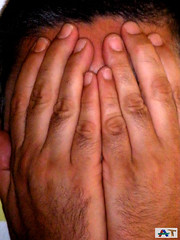
No Me Mireis!
Stressed or Depressed
Juggling multiple medications, always watching what you eat, ensuring you get enough exercise, and your daily routines can cause stress and, in some cases, depression. 

So how do you know if you're depressed or just stressed? There are some key differences.
Stressed
Stress is your body's physical response to high-demand situations that you have little or no control over, such as dealing with a chronic disease. Stress isn't all bad - on the upside, it can make you feel energetic and focused. 
On the downside, if you're constantly stressed, you may experience health problems overtime: high blood pressure, increased risk of heart attack and stroke, and premature aging.

Depressed
Depression is more than just feeling blue - it's a serious medical condition. If you have diabetes or high blood pressure, you're twice as likely to suffer from depression as someone without the disease. 

Only your doctor can tell you for sure, but if you have several of these symptoms for more than two weeks, you may be depressed:
  • Feeling nervous or emotionally empty
  • Feelings of excessive guilt or worthlessness
  • Tiredness or a "slowed down" feeling
  • Restlessness and/or irritability
You may need help from a mental health professional if you suffer from depression. However, stress is manageable. So, are you ready to lower your stress level?  Try these tips:

Slow down. 
Make time each day to sit quietly, preferably for at least 15 minutes. Focus on breathing deeply. Think pleasant thoughts.

Just relax. 
Have you ever been surprised to notice your jaw was clenched or your shoulders were tight? We tend to be tense without even realizing it. Try this: Lie down and, starting at your feet, clench each muscle group for a count of 10, then relax - all the way up your body.

Move your body. The best stress buster around is exercise. Take a walk, work in the yard, go to the YMCA ... you'll feel the benefits instantly.


Any comments? Leave them below.

Enhanced by Zemanta

Friday, May 31, 2013

What You Need to Know About Strokes

A stroke occurs when arteries that supply the brain with blood becomes blocked , preventing blood flow. I had first hand experience with this situation when my  mother had a stroke. After being in a coma for nearly ten days she recovered completely and lived ten more years without any after effect.  The doctors and I agreed, it was a miracle.

Of the approximately 795,000 strokes that occur in the United States each year, about 610,000 are first strokes, and 185,000 are recurrent attacks. Although the incidence of stroke has declined significantly since the 1960s, the strokes that do happen are just as severe. In fact, stroke is a leading cause of serious, long-term disability in the United States.

The odds of having a stroke more than double every 10 years after age 55. More than two-thirds of strokes involve people over 65. If you have a stroke, the risk of dying from it also increases with age: 88% of deaths from stroke are in people 65 and older.Women have about 55,000 more strokes than men each year, and women make up about 60% of stroke deaths. Race is another risk factor. African Americans, for example, are almost twice as likely to suffer a stroke as are whites.

Although you can’t change your age, gender, or race, you can take steps to reduce other risk factors for stroke, especially ischemic stroke. The most common risk factors for both ischemic stroke and TIAs are high blood pressure (hypertension), diabetes, unhealthy cholesterol levels, obesity, and cigarette smoking. All of these factors affect the health of your blood vessels—increasing the risk not only of stroke, but also of heart disease. That’s why medications and other steps you take to reduce the risk of an ischemic stroke will also benefit your heart.

Some types of hemorrhagic stroke are more likely to occur in people with chronic high blood pressure.. But other types of hemorrhagic stroke seemingly strike out of the blue. Although abnormal blood vessel conditions such as an aneurysm (a bubble in the blood vessel wall that could rupture) or an arteriovenous malformation (an abnormal tangle of blood vessels) increase the risk, these conditions may only be discovered inadvertently while you are undergoing testing for something else—or may not be discovered until a stroke occurs.

Here are the warning signs and symptoms of stroke:
  • weakness in an arm, hand, or leg
  • numbness on one side of the body
  • sudden dimness or loss of vision, particularly in one eye
  • sudden difficulty speaking
  • inability to understand what someone is saying
  • dizziness or loss of balance
  • sudden, lasting, excruciating headache.

If you or a loved one experience any of these symptoms, immediately dial 911 or go or get that person to an emergency room immediately.


Have you had an experience like this? Leave you comments below.


Truth About Vegetarianism and Its Benefits

Living by good health principles is an important element in your realization of success.  Depending upon your definition of success, the r...